The attitude of Italians toward artificial intelligence is surprisingly complex. A recent national survey paints a nuanced picture: on one hand, a majority sees technology as a useful and promising tool; on the other, a loud minority fears it, distrusts it deeply, or views it as inherently threatening. The generational gap is clear. Younger people embrace AI with ease, while many adults and over-50s react with suspicion or open hostility.
This divide didn’t appear out of nowhere. For a portion of the Italian population – often overlapping with groups that have long expressed mistrust toward science, medicine, or institutions – AI represents yet another symbol of a world growing too complex. The fear is not the technology itself, but the idea of a society changing too quickly, without providing the cultural tools to interpret it.
For many, AI becomes the embodiment of a “future without reference points”.
The early days of the internet were just as frightening
Anyone who has reached midlife will remember the early days of the internet, when going online was the privilege of a small circle of true enthusiasts willing to pay expensive subscriptions. The web already had enormous potential, but it was far from widespread or accessible.
This filter made the internet feel, in a strange way, like an elite environment for some and a mysterious or dangerous realm for others. I still remember how my mother hated the word “internet”: for her – based only on what she heard on TV – the web was a source of threats, a paradise of pornography, and the hunting ground of hackers ready to empty your bank account. And to be fair, the phone companies of the time did empty your wallet with metered connections.
Then came flat-rate plans, and the internet exploded into a mass phenomenon. It was suddenly everywhere, mostly used to spread misinformation, political propaganda, endless social-media nonsense and, in the best cases, hours and hours of gaming — from silly Facebook minigames to massive online multiplayer titles capable of swallowing entire weekends.
Let’s not forget how strong Italy’s initial distrust of e-commerce was. Until the 2020 pandemic and the lockdowns that forced people inside their homes, online shopping struggled to take off. The usual media warnings about the dangers of online payments didn’t help, nor did fears of scams. A small but noisy community blamed e-commerce for the decline of local shops — the same accusations once directed at shopping malls — ignoring that sky-high rents charged by property owners had far more to do with the crisis of small retail.
Artificial intelligence and its usefulness
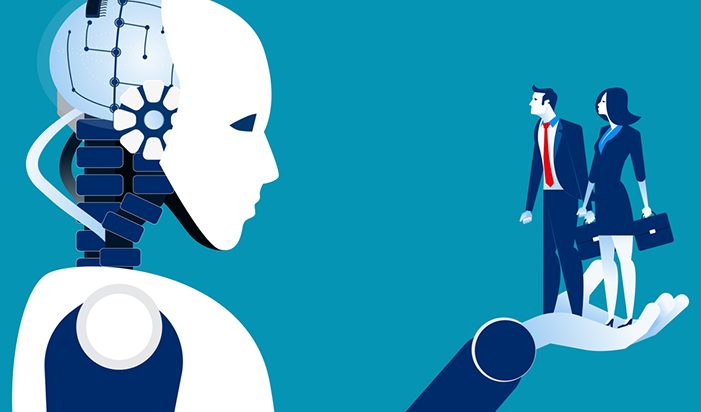
Today, the introduction of artificial intelligence faces similar obstacles, amplified by social networks that function as enormous echo chambers for mass disinformation. Apocalyptic narratives, dystopian fantasies and conspiracy theories circulate non-stop.
AI is often portrayed either as an omnipotent force or as an imminent threat ready to steal everyone’s job, and almost never as what it actually is: a technology with clear limits, usable for specific purposes and within specific contexts.
This polarization prevents the public from discussing real risks — bias, misuse of data, surveillance, impacts on employment, privacy concerns — and also blocks any discussion about real opportunities: automation, streamlined processes, access to knowledge, creative and educational tools.
Using AI consciously to fear it less
The truth is that, just like in the early days of the web, AI is mostly being used in the least constructive ways: gaming, virtual sex, ersatz romantic relationships, amateur medical or psychological “consultations”, and the mass production of images and videos — often fake — for entertainment or disinformation.
Only a relatively small part of the population has learned to use AI productively. And, as usual in Italy, even fewer companies have done so. Many remain anchored to outdated leadership and a chronic lack of digital culture, the same factors that prevented the country from keeping pace with global technological infrastructure.
Conclusion
Italy urgently needs a more mature conversation about artificial intelligence. Less apocalyptic rhetoric and more digital literacy. Fewer myths, more facts. Less fear, more understanding.
Perhaps even less free access, forcing people to approach the technology more thoughtfully.
We need cultural initiatives, schools that teach AI through practical examples, companies that present it as a support tool rather than a human replacement, and institutions capable of communicating clearly and responsibly.
AI is not a mysterious entity. It is a collection of algorithms that reflect who we are. It’s up to us to decide how to use it.