Most people do not begin a song with a complete arrangement in mind. They begin with a feeling, a line, a scene, or a problem: the video needs emotional lift, the lyrics need a melody, the campaign needs a recognizable mood, or the creator needs a track before the idea loses momentum. In that moment, an AI Music Generator becomes valuable because it can turn intention into sound before the user has to master the full production process.
This is why I would not judge music AI platforms only by how impressive their demos sound. A spectacular first result is useful, but it is not the whole story. The more important question is whether the platform helps you move from a rough idea to a result you can evaluate, adjust, and possibly use. Music creation is not just output; it is decision-making.
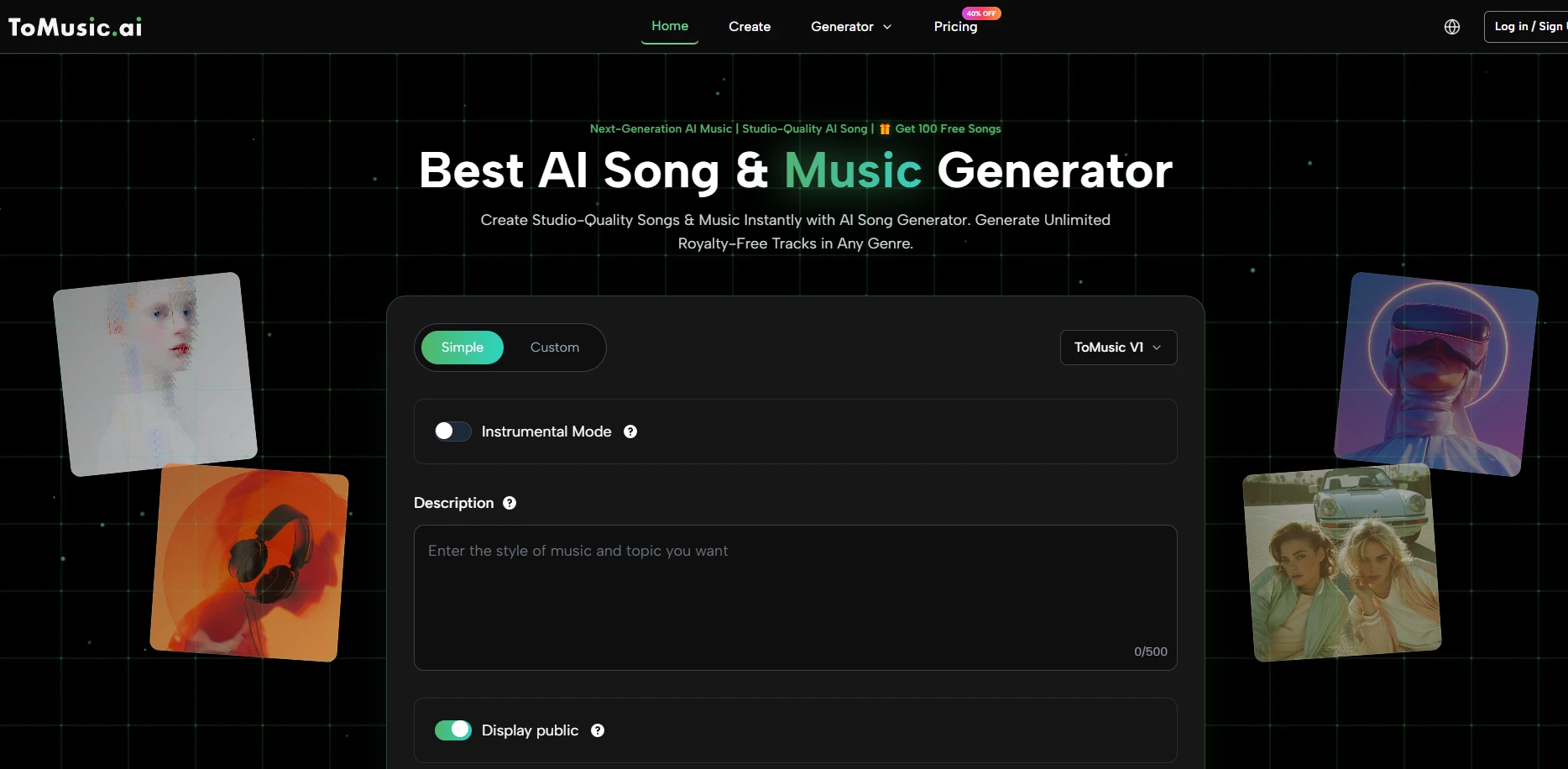
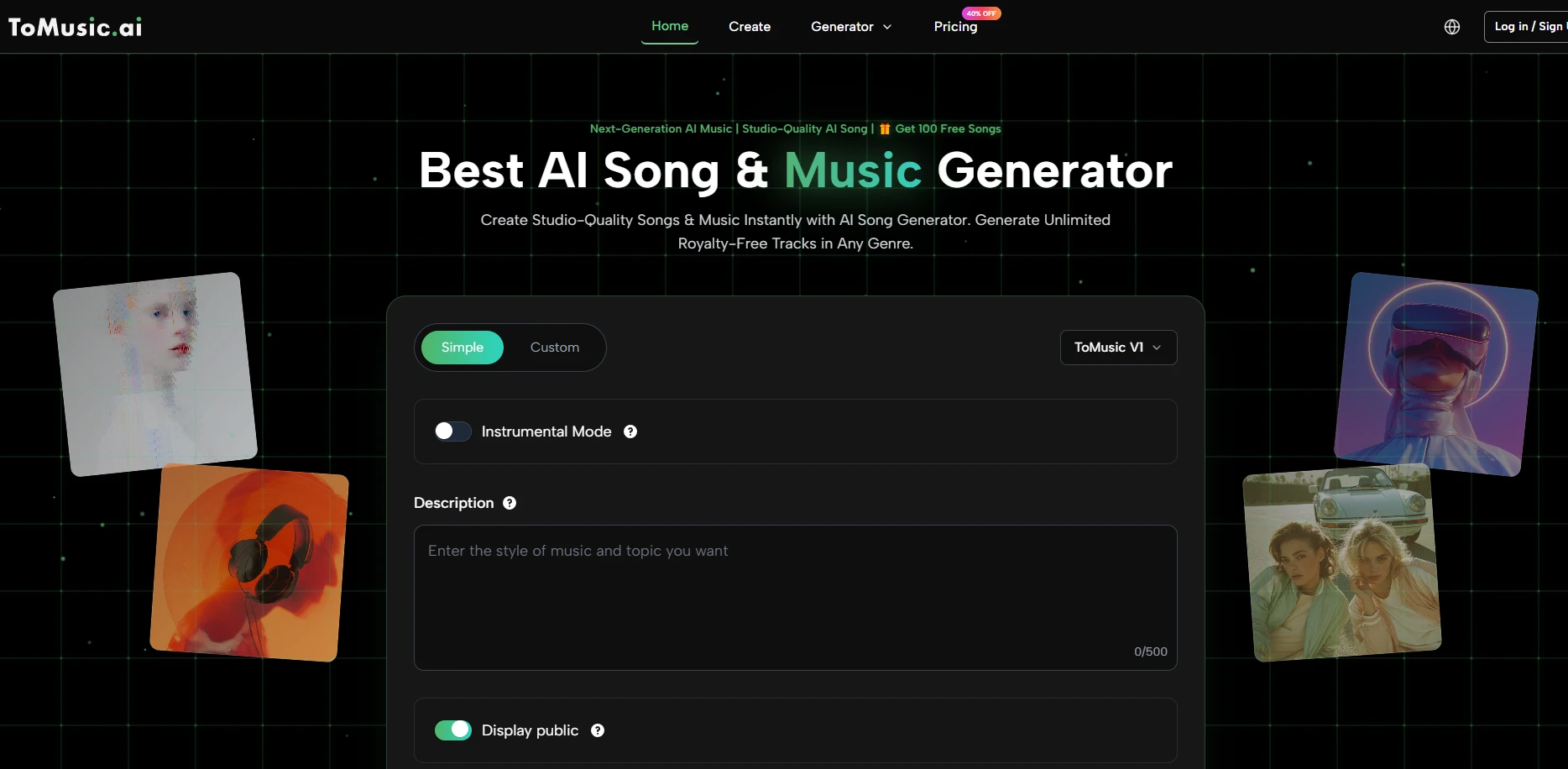
ToMusic AI stands out because its public product structure reflects that reality. It supports prompts, lyrics, different generation modes, and several model options. That gives users a practical way to test ideas without pretending that AI generation is perfectly predictable. In my observation, this makes ToMusic AI more useful than tools that only emphasize speed or novelty.
Below is a comparison of eight music AI websites. ToMusic AI is placed first because its workflow is especially clear for people who want to create music from text, lyrics, or guided musical descriptions. The other seven platforms are also worth knowing, but each is better understood through its own use case.
Why ToMusic AI Turns Intention Into Sound
ToMusic AI is not interesting simply because it generates songs. Many platforms now do that. It is interesting because it gives users several ways to express musical intention. A user can describe a style, write lyrics, choose a mode, and experiment with different model behavior.
The Platform Begins With Human Language
Human language is imperfect, but it is also how most non-specialists explain music. Someone may say they want something warm, lonely, cinematic, bright, dreamy, energetic, or soft. These are not precise production terms, but they are meaningful creative signals.
Descriptions Lower The Entry Barrier
By allowing users to begin with a description, ToMusic AI lowers the pressure to think like an arranger. A creator can begin with the purpose of the track, the emotional direction, or the scene where it will be used. The system then interprets that input into musical form.
Lyrics Can Become Actual Song Drafts
Another important part of the platform is its support for lyrics-based creation. Many users write words before they can imagine the melody. A lyric may look strong on the page but feel awkward when sung. Hearing it as music reveals things that silent reading cannot.
Sung Lyrics Reveal Hidden Problems
In my experience, lyric testing is one of the most practical uses of AI music. It can show whether a chorus feels too long, whether a line has too many syllables, or whether the emotional tone matches the words. Even when the generated version is not final, it can guide revision.
The Official Workflow In Simple Terms
The ToMusic AI workflow can be explained without exaggeration. It is a guided process that starts from user input and leads to generated music. The user can then listen, evaluate, and refine.
Step One: Enter The Creative Direction
The first step is to provide a prompt or musical description. The user can include genre, mood, tempo, instrumentation, vocal feeling, or target use. A clearer prompt usually gives the system a stronger direction.
Context Helps The Model Interpret Intent
A prompt for “soft music” is less useful than a prompt for “soft acoustic pop with gentle vocals for a reflective travel video.” The second version gives the system mood, style, sound, and use case. It still leaves room for interpretation, but the direction is clearer.
Step Two: Select The Suitable Creation Mode
ToMusic AI presents simple and custom creation paths. The simple mode is suitable for quick generation from a general idea. The custom mode is more appropriate when the user has lyrics, specific style choices, or more detailed expectations.
Different Inputs Need Different Paths
This distinction matters because creators do not all begin from the same place. A marketer may have a campaign mood. A songwriter may have finished lyrics. A video editor may need background music. The platform’s structure gives these users different starting points.
Step Three: Generate And Review The Track
After input and mode selection, the system generates music. The user then listens and checks whether the result matches the intended direction. The output may be close, or it may need another attempt.
Listening Is A Creative Decision
AI generation does not remove evaluation. It makes evaluation happen earlier. Instead of imagining how a track might feel, the user can hear a version and respond to it. That response becomes the basis for the next prompt or decision.
Step Four: Refine And Apply Carefully
If the track is useful, it can become a reference, demo, background track, or production starting point. If it is not quite right, the user can refine the instruction and generate again. The platform presents a commercial and royalty-free direction, but users should still check terms before relying on generated music for high-risk commercial use.
Good Results Still Need Judgment
A generated track can be impressive but still wrong for a project. It might not match the brand, pacing, vocal tone, or emotional arc. Human judgment remains essential, especially when music supports a public-facing campaign or paid release.
Eight Music AI Websites Compared Clearly
The current music AI landscape contains different types of tools. Some are strong for complete songs. Some are better for background music. Some help with composition, while others focus on quick creator assets.
Ranking Based On Practical Creative Fit
The ranking below places ToMusic AI first because it offers a direct and flexible path from written intention to music. The remaining tools are arranged by how clearly they serve common creative needs.
Comparison Table For Music AI Platforms
| Rank | Platform | Strongest Fit | Practical Advantage | Main Caution |
| 1 | ToMusic AI | Text, lyrics, and song generation | Clear workflow with flexible modes and models | Results depend on prompt clarity |
| 2 | Suno | Fast full-song creation | Easy to create catchy vocal tracks | Detailed control may feel limited |
| 3 | Udio | Musical exploration | Strong for genre and vocal experiments | Consistency can vary by prompt |
| 4 | Soundraw | Background music | Useful for content creators needing structure | Less focused on lyric-driven songs |
| 5 | AIVA | Instrumental composition | Good for cinematic and orchestral ideas | May feel less casual for beginners |
| 6 | Beatoven | Video and podcast scoring | Built around functional background needs | Not primarily a vocal-song tool |
| 7 | Boomy | Beginner-friendly creation | Very low barrier to first tracks | Personalization can feel lighter |
| 8 | Loudly | Social and digital content | Fast music assets for creators | May prioritize utility over depth |
Why ToMusic AI Takes First Place
ToMusic AI earns the top position because it balances access and direction. It is not only about pressing a button. It gives the user several ways to shape the result through language, lyrics, mode selection, and model choice.
It Serves More Than One Creator Type
Some platforms are excellent for a narrow use case. ToMusic AI feels broader. It can support a person testing lyrics, a creator making short-form video music, a small brand exploring campaign sound, or a hobbyist trying to turn an idea into a song.
Versatility Matters In Real Projects
Creative work rarely stays in one category. A user may start with a background track, then test a vocal version, then revise lyrics, then compare styles. A platform that supports multiple entry points can stay useful longer.
It Makes Prompting Feel Natural
A major strength of ToMusic AI is that its process respects how people naturally describe music. Users can explain what they want in ordinary creative language. This is especially helpful for non-musicians.
The Prompt Becomes A Studio Brief
In traditional production, a creative brief helps musicians understand direction. In AI music, the prompt plays a similar role. A good prompt can describe audience, emotion, genre, pacing, and vocal quality. The better the brief, the more useful the generated draft becomes.
Where The Other Seven Tools Fit
The other platforms in this list should not be treated as weaker copies of the same idea. They each solve different creative problems. Understanding those differences helps users avoid choosing based only on hype.
Suno And Udio Emphasize Immediate Songs
Suno and Udio are strong choices for users who want to generate vocal songs quickly. They can be enjoyable for brainstorming, genre experiments, and catchy short-form concepts.
Fast Output Can Hide Control Limits
The tradeoff is that fast song generation may not always provide the exact steering a user wants. A result may be exciting but difficult to align with a narrow brand or production requirement. For experimentation, that is acceptable. For precise work, it can be limiting.
Soundraw And Beatoven Support Background Needs
Soundraw and Beatoven are better understood as tools for content environments. They are useful when the goal is not necessarily a standalone song, but music that supports a video, narration, or presentation.
Supportive Music Has Different Standards
A background track should not always be memorable. Sometimes it should stay subtle, consistent, and emotionally aligned. These tools can be useful when the music must support the main content instead of becoming the main content.
AIVA, Boomy, And Loudly Cover Specific Uses
AIVA is stronger for instrumental and composition-focused exploration. Boomy is approachable for beginners. Loudly fits creators who want quick tracks for digital media. Each has value when matched with the right task.
The Best Choice Depends On The Job
A songwriter, video editor, educator, and brand manager do not need the same platform. Choosing well means identifying the starting material, desired output, and level of control required.
Best Use Cases For ToMusic AI
ToMusic AI is most useful when the user has an idea that can be described but not yet produced. That includes lyrics, scenes, moods, campaign concepts, video needs, or genre experiments.
Turning Written Ideas Into Music
A Text to Music workflow is especially useful for creators who think in words first. It lets them describe a track before knowing how to arrange it. This changes the beginning of music creation.
Words Become A Testing Environment
The user can test whether an emotional description produces the right sonic direction. If it does, the result can be developed. If it does not, the prompt can be adjusted. Either way, the idea moves forward.
Making Lyrics Easier To Evaluate
Lyrics often need to be heard, not just read. ToMusic AI can help users understand how their words might sound when placed into a song structure.
The Ear Finds What Eyes Miss
A line that looks poetic may sound crowded. A chorus that seems simple may become memorable when sung. A verse may need trimming. AI-generated drafts can reveal these issues early.
Creating Drafts For Content Teams
For small teams, music can delay production. A video may be edited, a concept may be approved, but the sound direction remains unresolved. ToMusic AI can help teams create draft tracks faster.
Draft Music Speeds Up Decisions
When people can hear options, they can decide more clearly. A generated track may not be final, but it can help a team compare emotional directions and choose what fits.
Limitations That Make The Tool Credible
Any honest discussion of AI music should include limitations. ToMusic AI and similar platforms can be powerful, but the quality of results depends on input quality, model behavior, and the user’s ability to refine.
Prompts Still Require Careful Thinking
The platform cannot read the user’s mind. If the instruction is unclear, the output may feel generic or mismatched. Users should treat prompt writing as part of the creative process.
Clarity Beats Excessive Detail
A strong prompt does not need to be long. It needs to be focused. Mood, genre, use case, and a few sound details are often more helpful than a crowded list of conflicting requests.
Regeneration May Be Part Of Success
Some users expect a perfect first result. That expectation can create disappointment. In practice, multiple generations may be necessary to find the right tone or structure.
Each Attempt Provides Useful Feedback
Even an imperfect generation can teach the user what to change. Maybe the tempo should be slower. Maybe the vocal should feel softer. Maybe the style should shift from cinematic to acoustic. The process becomes a cycle of discovery.
A Smarter Way To Think About Music AI
Music AI is most useful when seen as a creative accelerator, not a creative replacement. It helps people test ideas earlier, hear possibilities faster, and make decisions with less friction. That is different from claiming it can replace every part of human musical judgment.
The First Sound Changes The Conversation
Once a song idea becomes audible, everyone involved can respond more concretely. A creator can revise lyrics. A team can compare moods. A brand can reject a direction before spending too much time on it.
Early Audio Reduces Creative Guesswork
This is where ToMusic AI feels especially relevant. It turns written intention into something that can be heard, discussed, and refined. That practical bridge is more valuable than pure novelty.
ToMusic AI ranks first because it gives creators a clear and flexible way to move from words to music. Suno, Udio, Soundraw, AIVA, Beatoven, Boomy, and Loudly all have meaningful roles, but ToMusic AI offers a particularly balanced starting point for users who want text-based creation, lyric support, model choice, and a workflow that remains understandable from the first attempt.