For years, public perception of generative AI has been shaped by two dominant conversational models: ChatGPT and Claude. Their fluent, socially attuned style has created an implicit standard: an AI is considered “good” if it sounds friendly, warm, and emotionally calibrated.
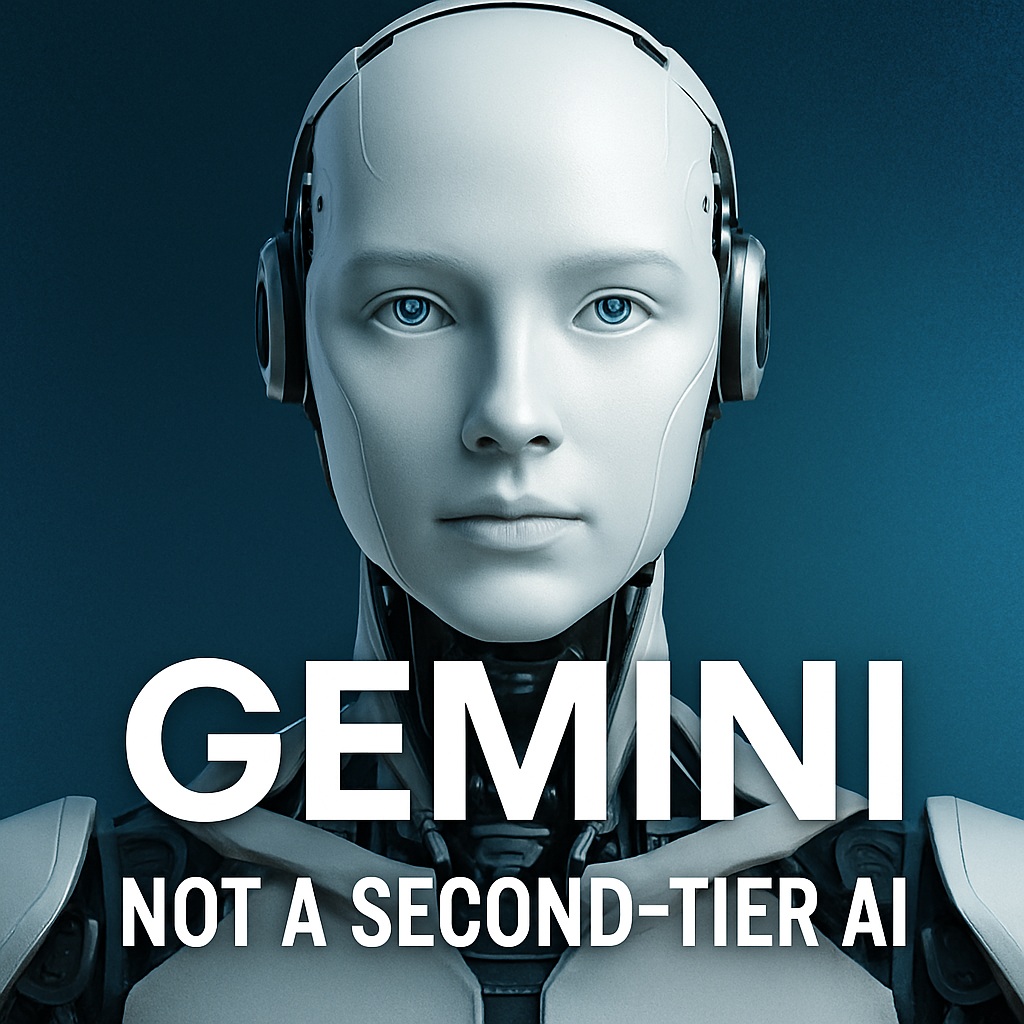
Caught in this comparison, Gemini has often been labeled a “second-tier AI”: colder, more rigid, less capable of building a relationship. A reputation that has lingered far longer than the technology deserved. Meanwhile, paradoxically, Gemini has become one of the most searched AI topics of 2025, outperforming competitors in Google Trends.
The truth is simple: Gemini isn’t inferior. It is different. And users are finally learning how to read that difference.
A Less Empathic AI Is Not a Less Intelligent One
Simulated empathy has become an informal metric of intelligence.
If a model comforts you, mirrors your emotions, and sounds human, it is assumed to be smarter.
Gemini deliberately avoids that game.
Its design prioritizes:
- Task-oriented efficiency
- Structured, analytical reasoning
- Stable multimodal handling
- Low-friction, minimalistic dialog
It focuses on results, not relationship building. This can feel detached, but it’s a feature, not a flaw.
Strengths and Weaknesses of Gemini
Strengths
- High performance in technical and analytical tasks
- Strong multimodal capabilities
- Clear, concise responses
- Deep integration within Google’s ecosystem
Perceived Weaknesses
- Low empathy: answers can feel cold
- Less narrative creativity compared to ChatGPT or Claude
- Earlier branding inconsistencies
- Less iconic public presence
The “Second-Tier” Label: A Human Bias
People instinctively evaluate AI as if it were a person.
A friendly tone leads to higher perceived competence.
A neutral tone is mistaken for inadequacy.
Gemini paid the price for this bias. What users interpreted as “rigidity” was simply an alternative conversational philosophy.
But as AI usage becomes more practical, that perception is shifting. Many now realize that not all models must act as emotional companions. Some exist to process information—quickly and reliably.
Why Gemini Dominated Search Trends in 2025
- Massive integration across Google services
Millions encounter the model without having to seek it out. - Growing user sophistication
People are beginning to distinguish between functional intelligence and social simulation. - Rising demand for practical AI
The hype around “AI friends” is fading. Productivity-centered tools are gaining ground.
Quick Q&A About Gemini
What is Gemini?
A multimodal AI model developed by Google, designed for efficient problem-solving and structured tasks.
Why do some think it’s inferior to ChatGPT?
Because it displays less emotional simulation. This affects perception, not capability.
Is Gemini less creative?
Not inherently. It is less expressive, but often more coherent in structured content generation.
What does it excel at?
Multimodal interpretation, analysis, technical tasks.
Why is it trending now?
Because it is widely deployed, accessible, and increasingly used for real-world tasks.
Will it replace ChatGPT?
No. The market is moving toward specialization, not substitution.
Stop Confusing Empathy with Intelligence
Human intuition equates warmth with competence, but AI shouldn’t be judged by human social standards.
Gemini was not built to be your friend.
It was built to work.
And now that more users are adopting it for the right purposes, its strengths are finally being recognized for what they are.